
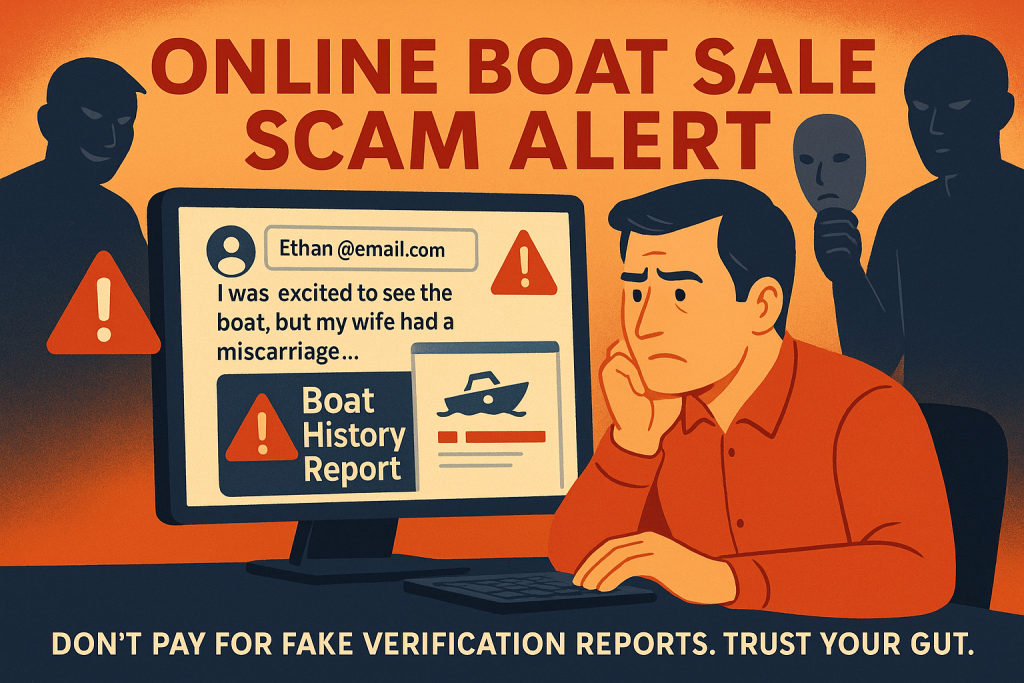
I have been banning fake buyers who run a specific type of scam. I have heard from multiple sellers who have experienced and fell for almost the exact same scheme. I’m sharing our stories here to protect other boat owners, especially those listing for sale by owner.
The Scam: How It Works
Scammers pose as interested boat buyers and reach out to sellers with questions that seem genuine. Over email, WhatsApp, or phone, they appear eager and knowledgeable—but their end goal is always the same: to trick you into buying a fraudulent “hull history” or “digital boat report” from a fake third-party website they control.
Here’s how it happened in two real cases:
Case 1: Miscarriage
I received a message from a supposed UK buyer named Ethan Montgomery, who claimed to be based in Martinique. Despite a few red flags—such as being “video shy” and having an Indian accent that didn’t match his name—I gave him the benefit of the doubt. We even spoke on the phone.
He asked me to get a certificate from [https://digitalvehiclereport.com], claiming it was necessary to confirm the boat had no past accidents. The website looked legitimate, so I paid $99 for the report.
After I sent it, he confirmed he was still interested and would visit to see the boat—then suddenly said he couldn’t because his wife had a miscarriage. That was the last I heard from him.
It became clear: the entire goal was to get me to pay for the fake certificate. Once I did, the scammer disappeared.
Case 2: Reimbursement
Another seller had a very similar experience with a scammer using the name David Cliff and email [lhchckgcyci@gmail.com]. Their conversation lasted for days:
- David asked questions about the boat’s history, pricing, and location.
- He insisted the seller buy a “hull history report” from (https://boathullrecords.com —another) fake site.
- He promised to reimburse the cost at the time of the deal and even mentioned giving a cash deposit.
- After the report was sent, he delayed the meeting and stopped responding.
David later sent a confusing message claiming the owner had been scammed and should seek a refund—possibly part of a tactic to muddy the waters or impersonate a concerned third party.
What These Scams Have in Common
- Buyer contacts you directly through your listing.
- Claims to be from one country but is actually calling from elsewhere (often a call center).
- Reluctance for video calls, or fake excuses (e.g., “video shy”).
- Buyer has a name that doesn’t match their voice or accent.
- They pressure you into getting a report from an unknown third-party site.
- They may even send multiple emails from the same account pretending to be different people.
- The scammer vanishes after you send the report or money.
List of Known Scam Report Sites
These sites are fake or suspicious and linked to multiple scams:
Check reviews on Trustpilot, ScamAdviser, or Reddit to verify any unknown verification service before paying.
Red Flags to Watch Out For
- Buyer avoids video communication.
- Pushes third-party services you’ve never heard of.
- Name and accent don’t match.
- Unusual urgency or emotional manipulation (e.g., family emergencies).
- Promises to reimburse you later for money you spend now.
Tips to Protect Yourself
- Never pay for verification services a buyer insists on.
- Google the name of the certificate site + “scam” or “review” before using it.
- Ask the buyer to pay for the report if they really want it.
- Report the scam to the platform and share your experience publicly.
Final Word
These scammers are clever and patient—but they’re using a predictable formula. If you’re a boat seller, stay cautious and trust your gut. If something feels off, it probably is.
Please share this with other boating communities and forums to keep more people from falling into the same trap.