
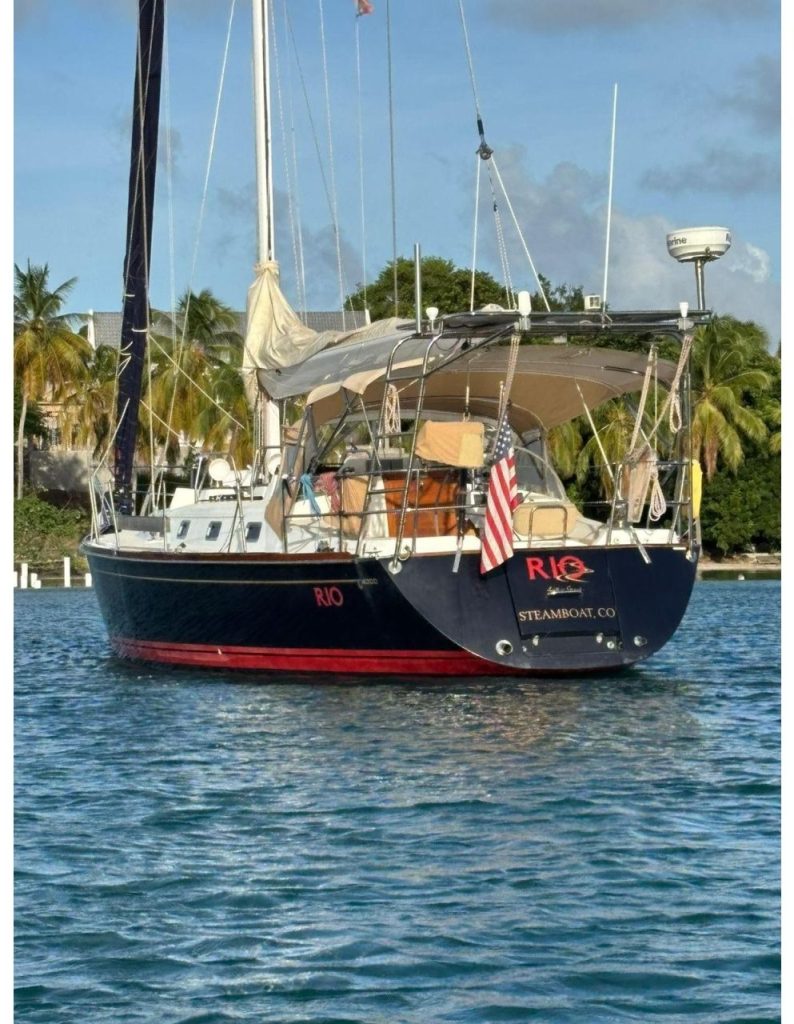
A single-owner, custom-ordered performance cruiser that has spent 16 years being loved — and it shows in every detail.

Anchored in the turquoise calm of Prickly Bay, Grenada, S/V Rio doesn’t just look the part of a well-loved cruiser — she wears the fingerprints of a single, meticulous owner who ordered her new from the Annapolis Boat Show and has called her home ever since. Broker Chris Rundlett walks us through this 2008 Tartan 4300 with visible affection for both the boat and the man who has sailed her around the world.
An Owner You Want to Buy a Boat From
George, the original and only owner, custom-ordered Rio after wandering onto a Tartan display with no intention of buying. The fit, finish, and craftsmanship changed his mind. Sixteen years later, he still keeps her in show condition — and, tellingly, has commissioned brand-new North Sails headsails (both the self-tacking inner jib and the genoa) before passing her along. The mainsail remains in good shape, and a lightly used symmetrical spinnaker rounds out the wardrobe. As Chris puts it, this is the kind of seller you actually want to buy a boat from.
Built in Ohio, Built to Last
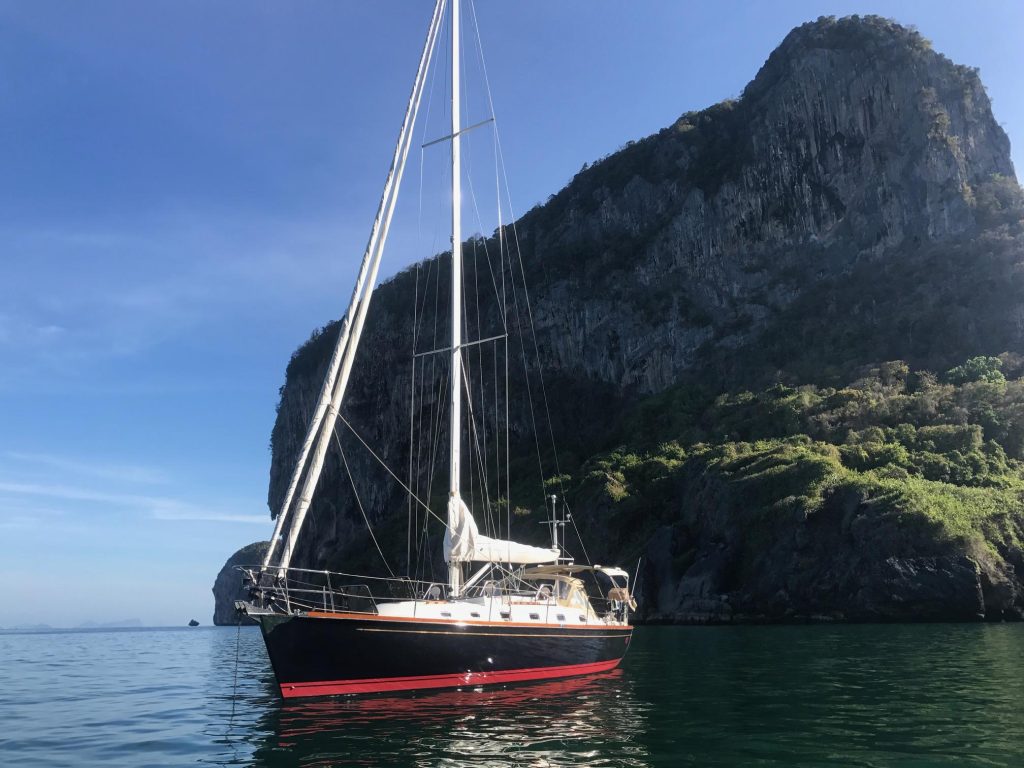
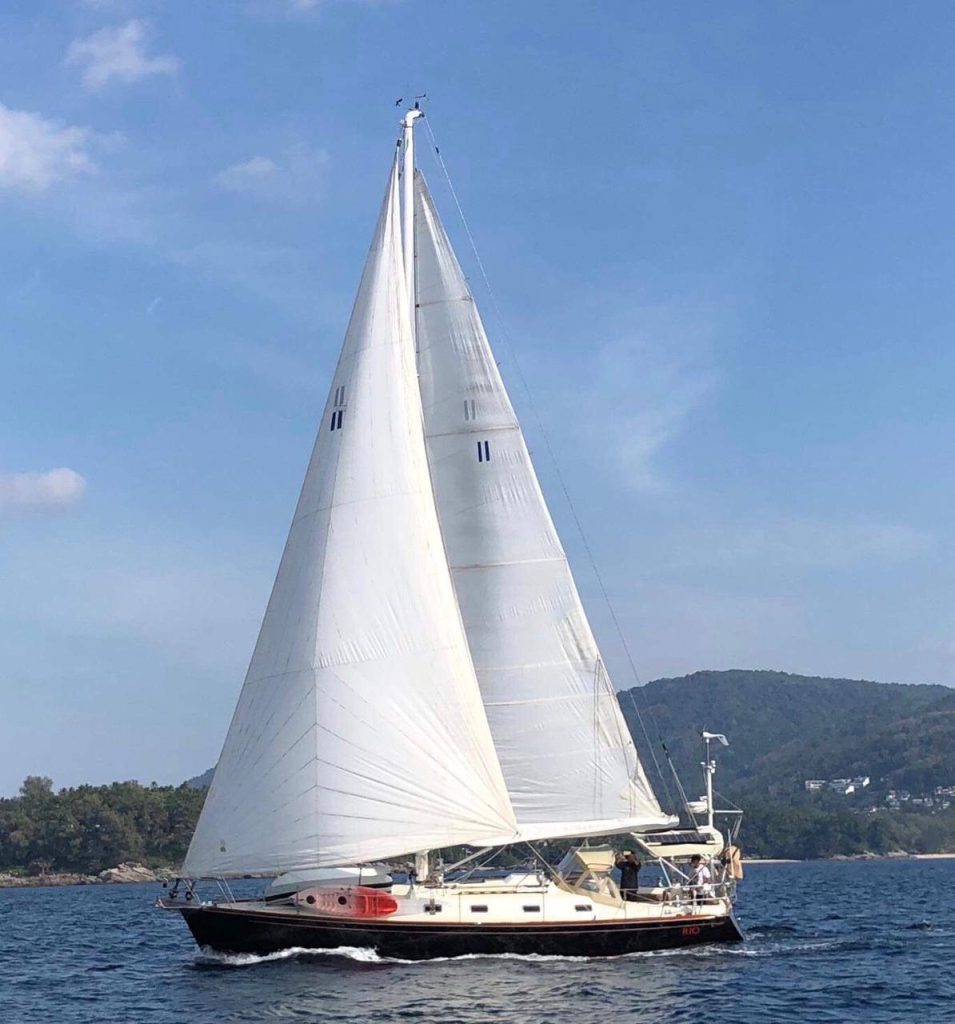
The Tartan 4300 is an epoxy-built hull — no osmosis worries — with a strength-to-weight ratio that has earned the brand its performance-cruising reputation. Aloft, Rio carries a carbon fiber mast and boom, painted white for longevity. Tartan claims the reduction in weight aloft is roughly equivalent to five crew on the rail; either way, it flattens the pendulum effect and lets the boat stand up to her sail plan. An adjustable hydraulic backstay with high-modulus Dyneema-style rigging is a rare treat on a cruising boat, letting you tune forestay tension for upwind work or ease everything off downwind for a fuller shape.
A Cockpit Designed for Real Sailing
The battleship-sized destroyer wheel is Chris’s favorite feature — you can sit anywhere in the cockpit and still steer with one hand. The traveler runs long and true across the cockpit (a proper one, not the compromised mainsheet arrangements now common on production boats), and every line leads aft to well-spaced, high-quality winches, one of them electric for the main halyard. Older Raymarine electronics at the helm and repeated at the nav station still work well, though Chris candidly notes a fresh electronics package would be his one upgrade — figure a couple thousand up to around ten depending on ambition.
Small touches reveal the thinking behind the boat: molded-in cup holders at the helm, a padded helm seat with backrest, a right-sized cockpit table (not the oversized slab that traps you against the coaming), and a drop-down transom that folds open to reveal the swim ladder — welcome for anyone tired of yoga-poses to board from a dinghy. A deck shower, MOB gear under fitted covers, and a covered propane grill complete the aft end.
Ready for Distance
Rio is dressed for cruising, not day-sailing. A custom solar arch carries panels sized to keep the batteries fed and doubles as davits for the dinghy — ideal for island hops or overnight security. Four stainless dorade vents (with protective guards) keep her ventilated in any weather; Chris points out these are increasingly rare because they cost real money to build. The hatches are large and framed in polished stainless rather than the aluminum that flakes and corrodes over time. George’s custom foredeck sun tent, which stows easily, keeps the cabin cool and lets hatches stay open through squalls.
Ground tackle is a stainless Delta plow with 150 feet of chain on an electric windlass — more than enough for Caribbean anchorages. One important correction from the listing: the draft is roughly 5.5 feet, not the 8.25 that had been listed in error. That opens up a great deal of shallower cruising ground for a 43-footer.
Down Below: Two Cabins, Two Heads, Real Space
Rio is laid out as a two-cabin, two-head boat — spacious and private for a couple or a cruising owner with occasional guests. The galley greets you at the base of the companionway with a double molded-in sink and generous counter space. Ventilation is genuinely impressive: with the big hatches and dorades doing their job, Chris and his co-host filmed comfortably down below with the fans off on an 80-degree January day. Brightwork throughout is tidy but not overwhelming — enough varnished wood for warmth, not enough to become a second career.
A liferaft sits in a custom cradle on deck. It is currently due for service, which most Caribbean cruisers postpone until they are ready for an offshore passage; Sea Safety Services in Grenada handles it locally.
The Market in Context
The Tartan 4300 is not a boat you trip over in the classifieds. Right now, Rio is effectively the market.
| Active Tartan 4300 listings | 1 |
|---|---|
| Asking range | $230,000 |
| Median asking | $230,000 |
For a buyer who values epoxy construction, a carbon rig, real cockpit ergonomics, and the reassurance of a single fastidious owner, S/V Rio is a rare and honest offering — a Tartan that has been used the way she was built to be used, and cared for the way every boat wishes it were.