
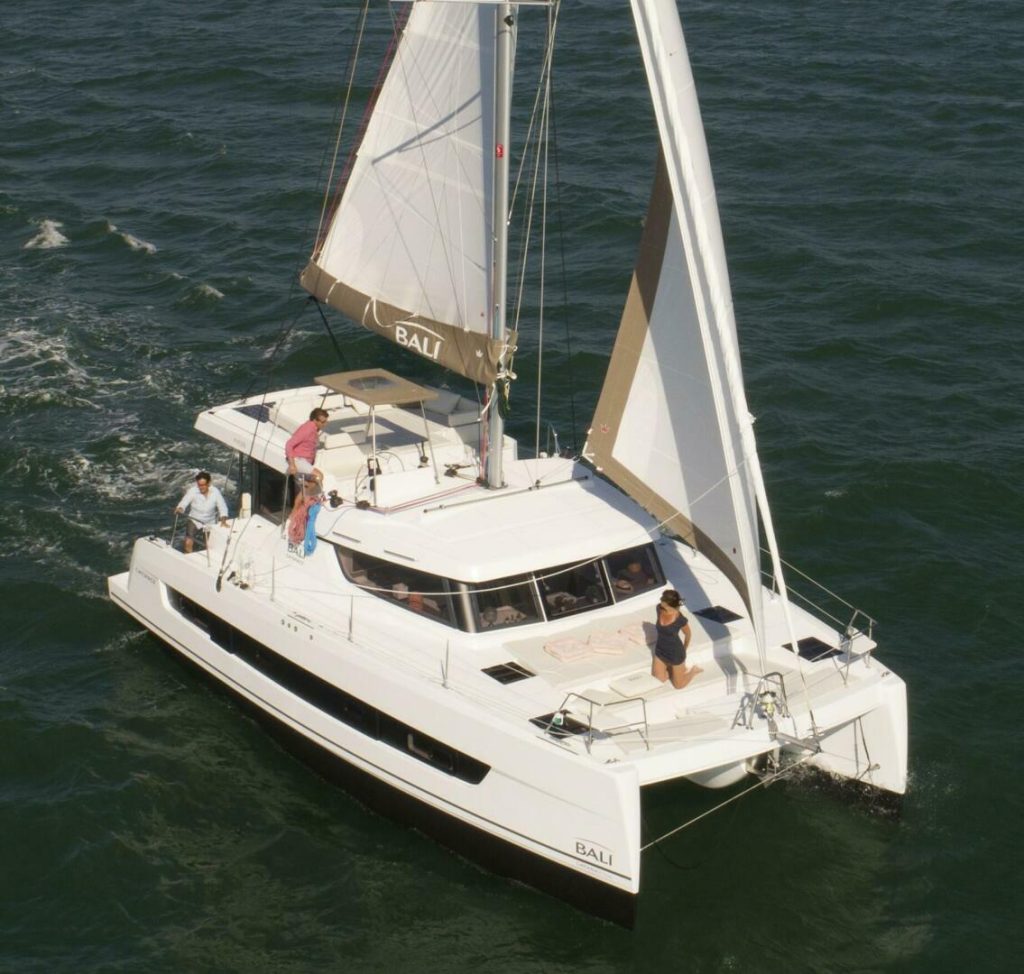
A technical walkthrough tackles the myths about Bali's closed foredeck — noise, weight, pitchpoling — and shows the foam-core plug to back it up.

Most catamaran tours dwell on cabin counts and cockpit cushions. This one does something rarer: it stops at the bow of the S/V Bali 40 Catspace and takes on, point by point, the objections that follow Bali’s signature solid foredeck around the docks. If you’ve been weighing a Bali against a trampoline-forward cat and wondering whether the closed deck is a clever feature or a compromise, this is the segment worth watching twice.
The noise question
First up is the complaint that water pounding beneath a solid foredeck creates constant racket underway. The presenter’s rebuttal is simple logic: if that much water were passing under the bows, boats with nets would be flooding their foredecks continuously — and they don’t. It’s an argument that lands because it appeals to what any sailor has already observed from the helm.
Structure, not a flat panel
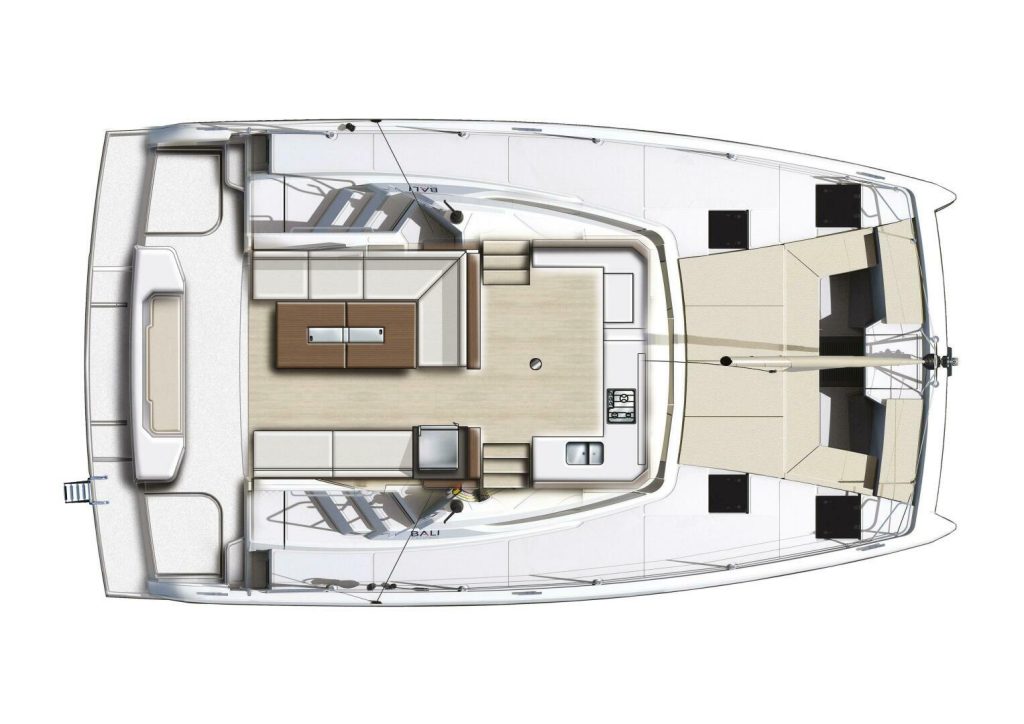
The second point concerns strength. The foredeck, he explains, isn’t a bare sheet of fiberglass spanning the hulls — it’s a structured, buoyant assembly. Compared with a pair of poles and netting, he argues the difference in structural stiffness “is extreme,” calling it about as strong as a catamaran bow can be built. For anyone planning ocean passages or simply tired of resewing trampolines, that’s a meaningful distinction.
Pitchpoling and buoyancy
The most interesting stretch of the video draws on personal experience rather than brochure copy. Recounting nasty seas in the Mediterranean aboard a Bali 54, he describes the scenario where pitchpole risk actually appears: double-digit speeds, 12 to 14 knots, driving down into a trough with the bows loading up. His observation is that the angled underbody of the solid foredeck engages as the bows depress, and with forward motion it pushes them back up. Nets, by contrast, offer no buoyancy at all. Whether or not you accept the conclusion wholesale, it’s a considered, sea-tested argument rather than a slogan.
The plug that makes the case
To answer the “it must be bow-heavy” charge, the video produces a physical hull plug cut roughly four feet from the gunwale. It reveals Divinycell closed-cell foam core — hard, not soft, despite what the word “foam” suggests — in a vacuum-infused laminate that delivers a consistent resin ratio. He notes that many volume builders opt for wooden cores because they’re cheaper, and credits Bali’s composite coring to the performance DNA it shares with Catana, which uses the same cores. The upshot: modern construction is light enough that a solid foredeck no longer carries the weight penalty it would have in the era of solid laminate.
Where the model sits today
The Catspace is Bali’s compact 40-footer, and this 2026 example is offered by Eric Macklin. For context on the model’s current market:
| Active Bali 40 Catspace listings | 4 |
|---|---|
| Asking range | $429,000 – $649,990 |
| Median asking price | $499,000 |
| Low | $429,000 | |||
| Median | $499,000 | |||
| High | $649,990 |